
Casino operations thrive on a delicate balance between entertainment, trust, and responsible play. Central to maintaining this equilibrium is transparency, which functions as both a practical safeguard and a psychological reassurance for players. When casinos are open about their rules, odds, and payout structures, they create an environment in which participants can make informed decisions. Transparency acts as a shield against uncertainty, reducing the perception of risk and fostering a sense of security that is crucial for sustainable enjoyment. A player who understands the mechanics of a game and the likelihood of outcomes can approach gambling with a clear strategy, managing expectations and minimizing the chances of impulsive or overly risky behavior. This understanding is the foundation of responsible gambling, where knowledge empowers rather than exploits.
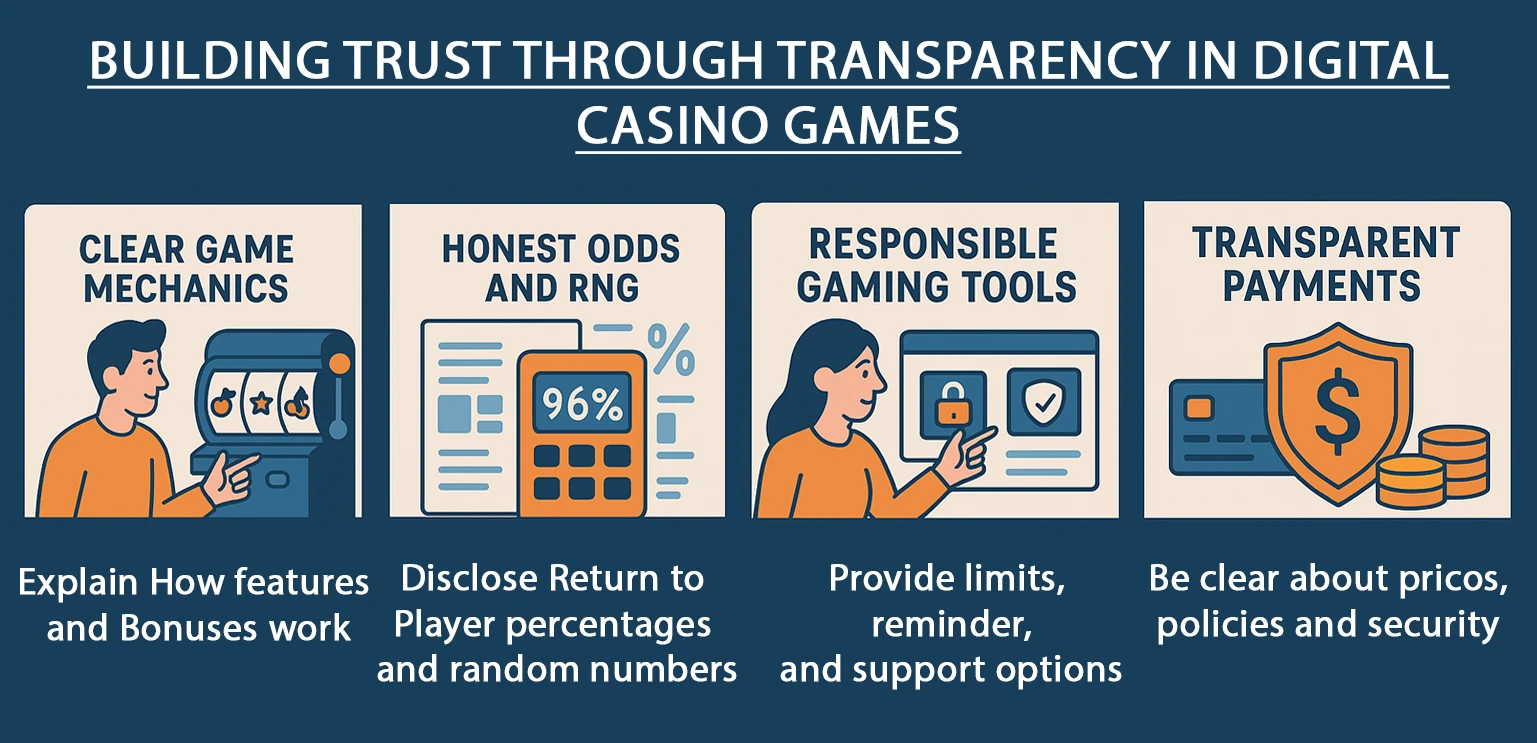
One of the key aspects of transparency lies in clearly communicating game odds. When casinos openly display payout percentages, players gain insight into the probability of winning and losing. This visibility allows individuals to calibrate their bets according to personal comfort levels and financial limits. Games with concealed odds or complicated payout structures often breed confusion, leading to frustration and reckless decision-making. In contrast, transparent casinos provide detailed information about each game’s rules, pay tables, and potential outcomes. By demystifying the process, they enable players to approach each session with awareness, reducing the likelihood of unexpected losses and the stress associated with them. Players feel more in control when they know the odds, even if the outcomes are ultimately uncertain.
Transparency also extends to operational fairness. Reliable casinos use certified random number generators and undergo independent audits, ensuring that the outcomes are genuinely random and free from manipulation. When these audits are made public or verified by third-party organizations, players receive tangible proof of integrity. This assurance diminishes perceived risk, as participants trust that their chances are not being undermined by hidden biases or unfair practices. Fairness is especially important in games of chance, where the uncertainty is inherent; knowing that the system itself is impartial allows players to focus on enjoyment rather than suspicion. Transparency in fairness promotes confidence, which, in turn, supports longer, more comfortable gaming sessions without the anxiety of being exploited.
Financial transparency is another critical component. Casinos that clearly communicate betting limits, withdrawal procedures, and bonus terms create a safer environment for players. Ambiguity around financial policies can lead to misunderstandings, unexpected losses, or frustration when attempting to redeem winnings. By openly sharing these policies, casinos equip players to plan their budgets and control their spending. This type of openness not only safeguards individual finances but also encourages a culture of responsible play, where participants engage consciously rather than impulsively. When players understand exactly how their money is handled and the parameters of wagering, the sense of risk diminishes, replaced by calculated engagement.
Transparency fosters an ethical relationship between the casino and its patrons. It demonstrates respect for the player, signaling that the establishment values fairness and clarity over exploitation. This respect is reciprocated through trust, which is essential in an environment where money and chance intersect. Players are more likely to engage with casinos that are upfront about rules, risks, and rewards, and less likely to experience anxiety or regret from hidden complexities. When trust is established, the gaming experience becomes more enjoyable, as the focus shifts from fear of manipulation to the excitement of gameplay. A transparent casino reduces emotional risk by eliminating unnecessary uncertainty, allowing players to immerse themselves fully without apprehension.
Furthermore, transparency empowers players to make strategic choices. Understanding payout structures, variance, and house edge enables participants to tailor their approach to each game. Some may choose to minimize risk with low-stakes play, while others may embrace higher volatility games with an informed awareness of potential outcomes. Both approaches are viable when knowledge guides decisions, reducing the chance of rash betting or overextension. Players who can assess risk accurately are less likely to chase losses impulsively or engage in behavior that could lead to significant financial stress. Transparent information is thus a tool for self-regulation, allowing individuals to maintain control over their gambling habits.
In addition to individual benefits, transparency contributes to the overall reputation of the casino industry. When establishments operate openly and consistently, they cultivate public confidence, attracting a broader audience and promoting long-term sustainability. Conversely, opaque practices generate skepticism and erode trust, deterring potential players and increasing scrutiny from regulatory authorities. By prioritizing openness, casinos not only protect players but also themselves, mitigating reputational risk and fostering a culture of accountability. Transparency becomes a virtuous cycle: clear communication reduces perceived risk, which enhances trust, leading to more responsible play and positive engagement.
Education is a natural extension of transparency. Casinos that provide resources explaining game mechanics, strategies, and odds empower players to make better-informed decisions. These educational initiatives reduce guesswork, allowing individuals to engage with games thoughtfully rather than blindly. Informed players are less likely to overestimate their chances of winning or succumb to impulsive betting, which are common sources of financial and emotional risk. By investing in transparency and education, casinos create an environment where participants can enjoy entertainment while maintaining awareness and self-control. The result is a safer, more satisfying gaming experience for everyone involved.
Ultimately, transparency acts as a risk-mitigation strategy that benefits both players and casinos. It transforms uncertainty into informed choice, confusion into clarity, and suspicion into trust. By openly sharing information about odds, fairness, financial policies, and strategic insights, casinos reduce the psychological and financial risks associated with gambling. Players gain confidence, make more deliberate decisions, and enjoy the experience without undue stress. In a field defined by chance, transparency is the constant that ensures fairness, clarity, and responsible engagement. It allows the thrill of the game to coexist with awareness, fostering a secure environment where risk is managed, trust is earned, and enjoyment is maximized.




Leave a Reply